
Tips for Traveling with Your Best Furry Friend (especially the Anxious ones)
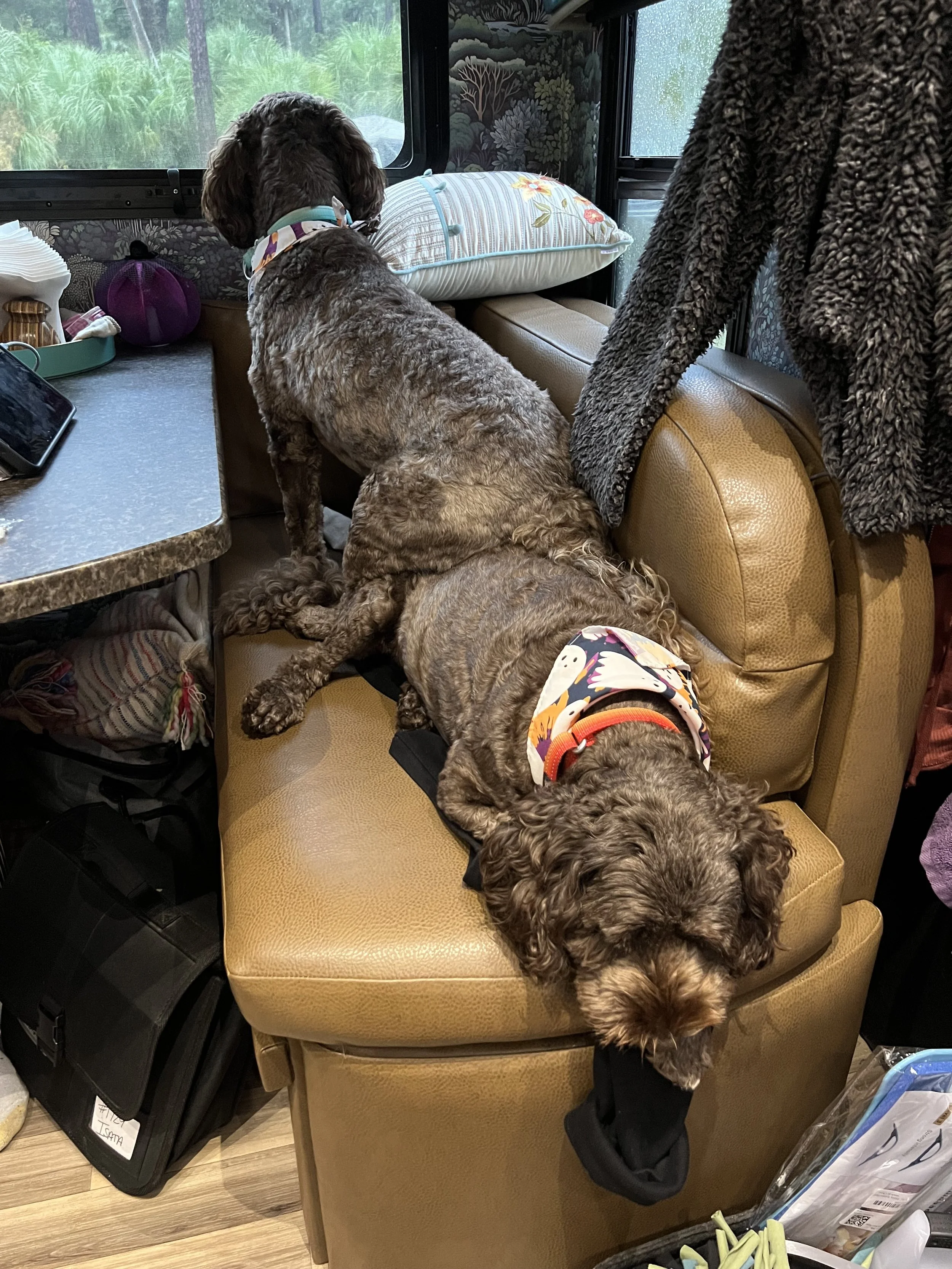
Helping Your Anxious Dog Feel Safe on RV Adventures: What Works for Us
As outgoing and friendly as Simon and Pru are, they both show signs of anxiety from time to time. Our dogs have their moments for sure - especially on that first trip when everybody’s anxiety level was a little higher than normal. And that, folks, is tip number one - Dogs pick up on your vibe, so to help them feel good about the journey and have a positive travel day, the best thing to remember is to stay as calm as possible. Traveling in the RV is a thrilling (and sometimes stressful) experience for us humans, but for many dogs, the motion, new sounds, changing scenery and unfamiliar places and routines can trigger real anxiety.
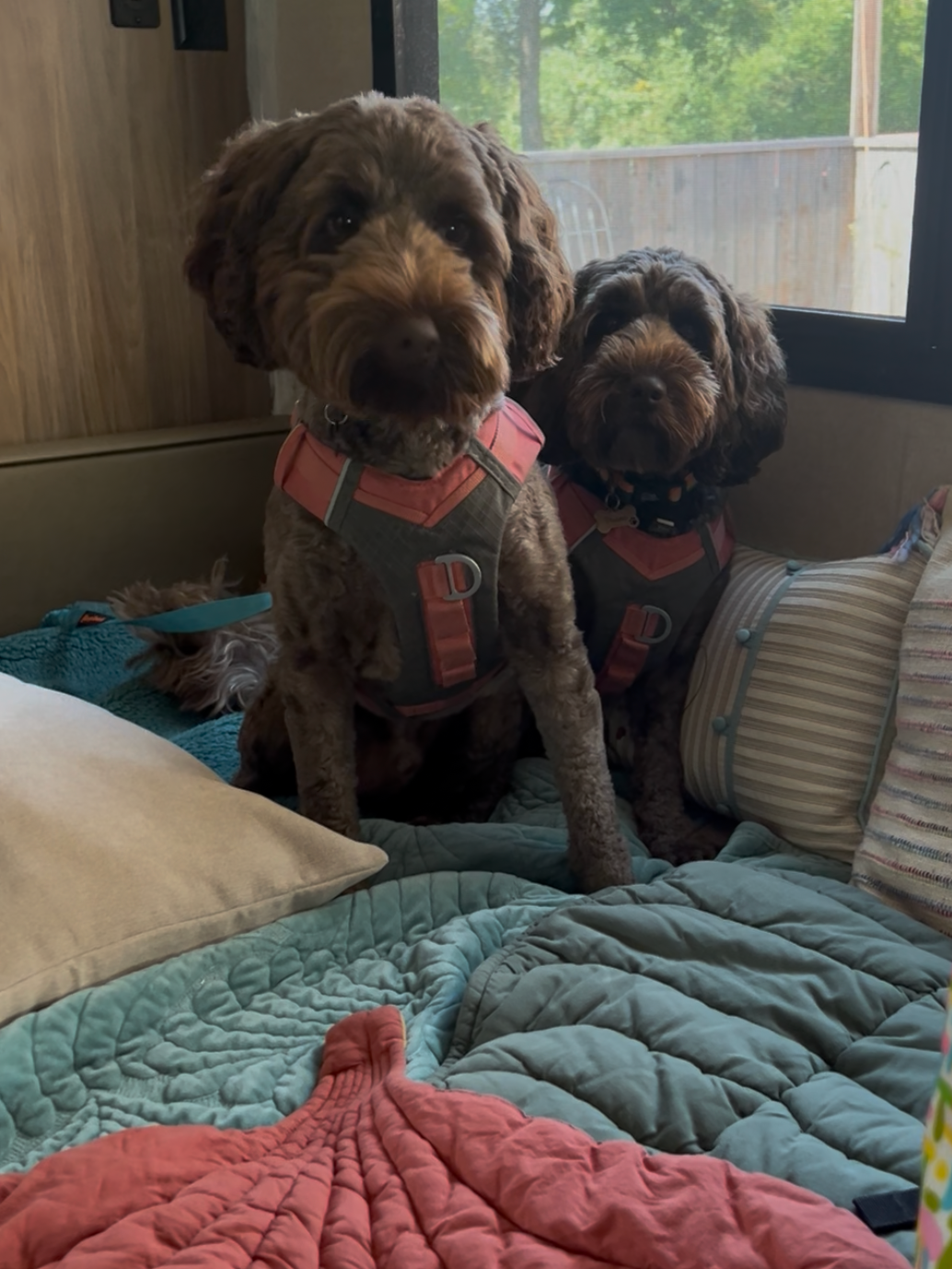
Motion sickness, noise anxiety and separation anxiety to name a few, Simon and Pru came factory loaded with a few of these triggers. Simon, the worrier of the bunch, keeping a constant eye on any and everything, noises, people, animals - you name it - he stays on steady alert. Pru is the empath, absorbing everybody’s stress and quietly holding it inside until it shows up with tummy upset and anti-social behavior when confronted by new people or other dogs. The good news is after miles of trial and error, we have it figured out. They’re not just surviving RV life - they seem to genuinely love it. Over time, we have discovered what helps Simon and Pru feel more confident in their travels, and actually now a lot of these things elicit some very excited tail-wagging and jumping for joy.
7The Slow Game of Desensitization
So here’s the thing; you can’t rush this process, and actually can’t rush any learning process with your pups. Remember that it doesn’t take a lot of time a day, but consistently every day, letting them experience the RV. If they are eager to enter, then just spend some time hanging out. If they hesitate upon approach, don’t push them, just open the door and scatter some treats about. Once inside, settle them in the place they will be riding on a trip. Make them a “place” - a place that is theirs for every journey - the most delightful place in the world - with sweet and calming words and lots of rubs and scratches. A familiar bed or blanket from home is extremely helpful in establishing their “place” in the camper. Don’t wash it before your trip - that smell is extremely helpful to them. Sit with them and enjoy some time together. It may take days for this to feel comfortable - remember to go slow and don’t rush. Once that feels good for everybody, crank the engine and repeat the happy relaxation time with your pup while the engine is running. When that feels ok and calm, take a short drive around the block. Then a quick overnight. Then a weekend.
It felt incredibly slow, but by the time we actually hit the road for a real trip, they had context - the RV wasn’t an alien spaceship that landed in the driveway. It was a place where good things happened and happy times and treats were to be had. Plus, Mom and Dad are within arm’s reach at all times - which I believe to be the biggest draw for our pups to go camping. Although, it was a slow start, Simon and Pru are as smitten with RV life as we are.
For the Motion Sickness Crew
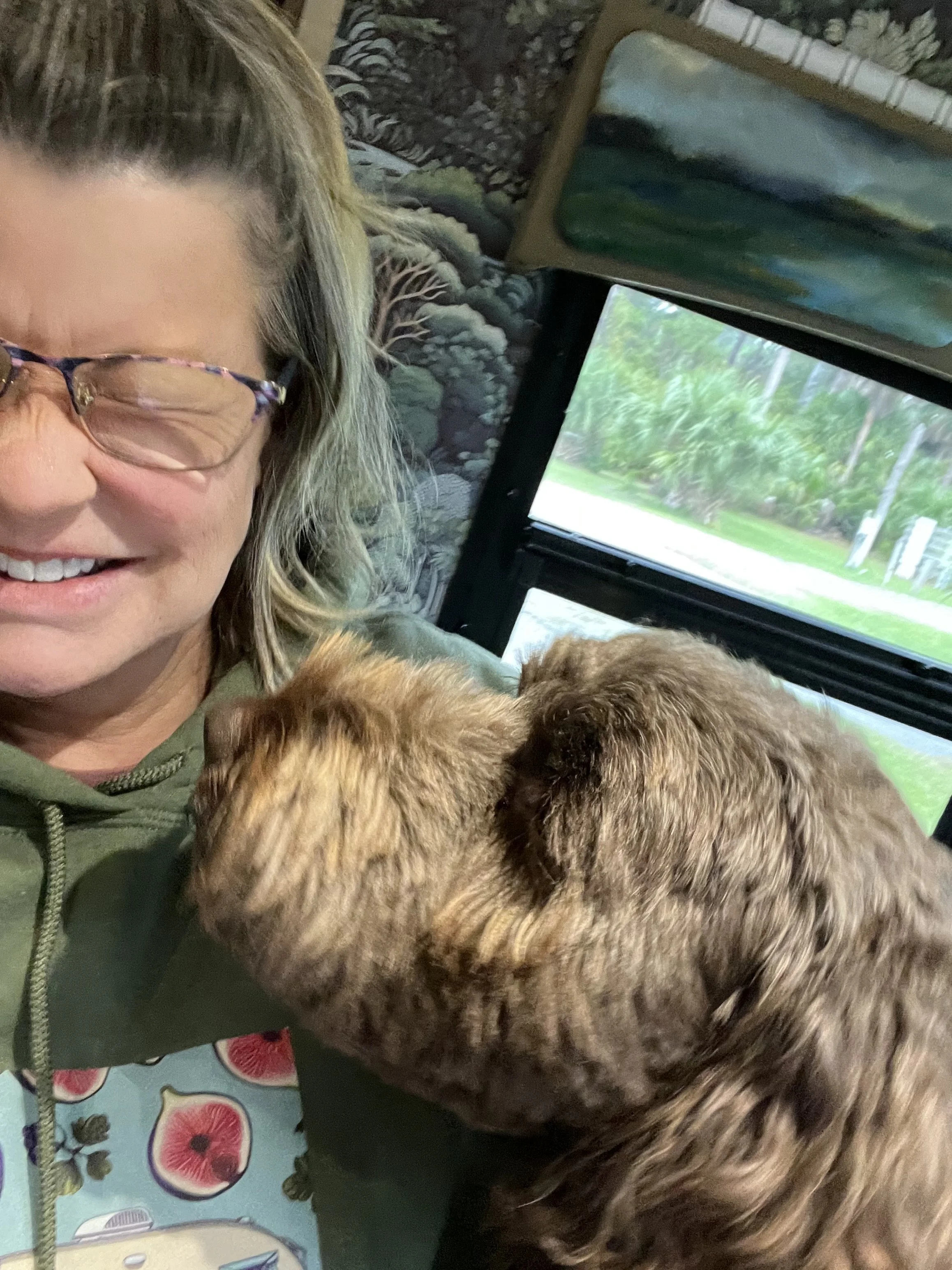
If your dog gets carsick, first: you have my sympathy. Second: there are actual solutions beyond just hoping for the best and keeping a roll of paper towels in the front seat (though, also, keep a roll of paper towels in the front seat). Simon was prone to carsickness at a young age in the beginning of car travel. I just kept the paper towels handy for a while and then realized that most of the time when he was sick, it was because I had fed them shortly before we got in the car.
-Fast Before Travel
So, the first tip I have is to withhold food for 2-3 hours before a drive. We sometimes delay our travel so Simon and Pru can have a normal breakfast and have time to digest and run around before embarking. If the drive is not too long, then we skip breakfast and they eat after arrival. It’s a timing issue, and honestly, it feels a little mean when you’re withholding food - but when someone is puking in the backseat, you reconsider what is actually “mean”.
-Fresh Air & Forward-Facing
Crack a window. Position their crate or bed where they can see forward - the same principles as human carsickness. It helps
Thorough Walk Before Departure
Take them for an extended walk in their familiar spot before you leave. Give them plenty of time to sniff around and plenty of opportunity to “potty”. If time allows, a quick little game of fetch or catch will help them get some anxious energy out and help them to settle
Frequent Stops
We break every two hours minimum. Sniff and stretch time, an opportunity to let some things go and to regroup and just get some fresh air. The trip takes longer, but it’s better and is worth it every time.
Noise Anxiety
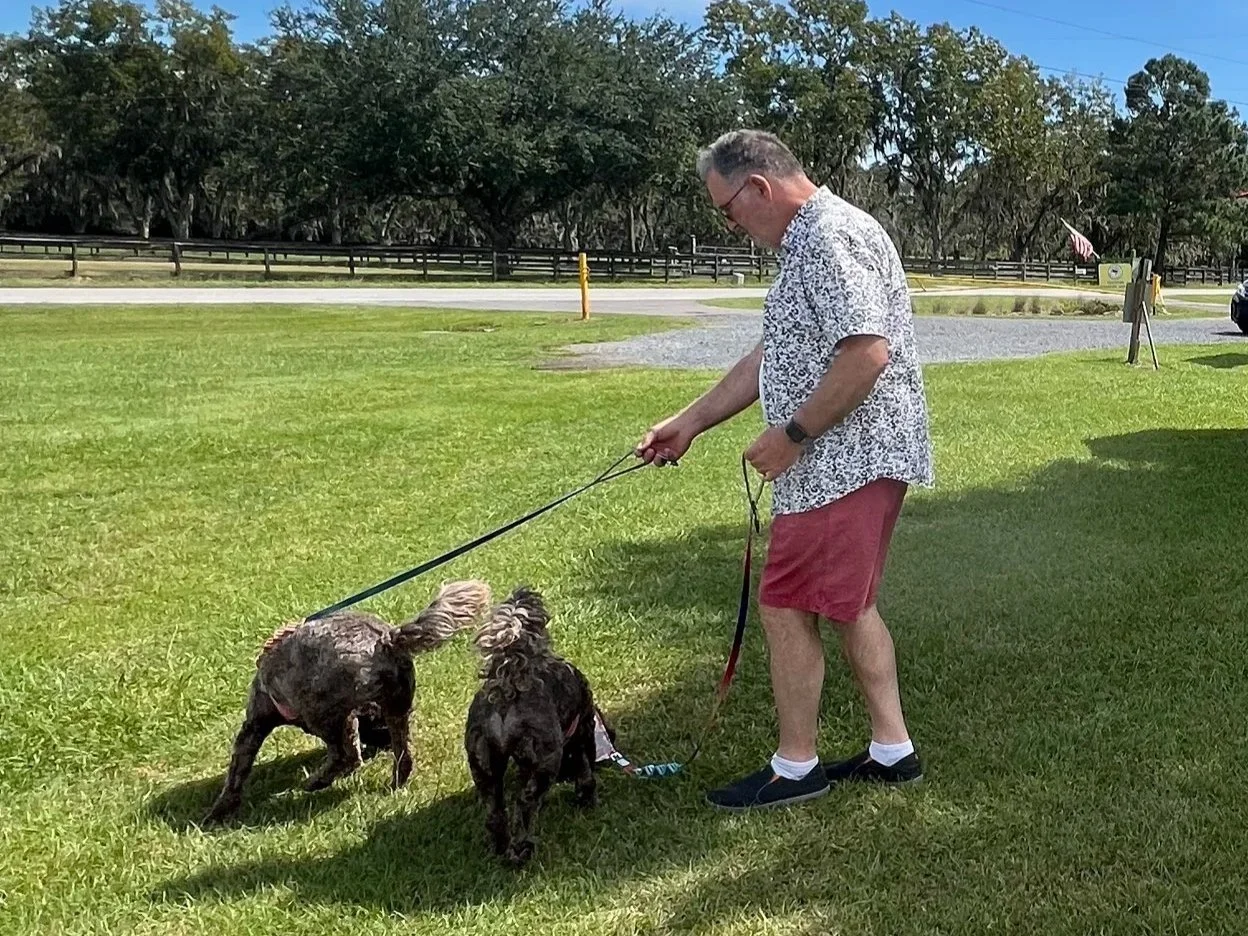
Oh, the campground. Generator next door, kids screaming with joy at 7am, a dog three sites down who has opinions or issues (or both). We had to get creative here, and to be honest, our creativity flows still. We are getting there though and have found a few helpful tricks in the meantime.
Pleasant or low-key Noise - White noise machine such as LectroFan (compact but loud enough to matter and runs on USB) - OR- Music through something like Spotify, Apple or Amazon Music, or Youtube -or whatever you enjoy listening to. Put it on - play it - make a little local noise to hopefully drown out noises that might send alerts to your pooch. There’s actually a YouTube channel called “Relax My Dog” that works pretty well for us, but try a variety to see which genre your puppy prefers.
Thundershirts - Fortunately, Simon and Pru are not in need of thundershirts - but our family dog before them, Lily did (God bless her soul). They seem like a gimmick, but I promise you, they do work - not 100% - I’d say about 50% but they definately take the edge off and help transform a totally unmanageable dog into a dog that will accept some help and some comfort and not totally freak out.
But wait, there’s MORE - Desensitation!! - Don’t run from situations that cause stress, anxiety or barking. Take it slow, but allow your dog(s) to experience these things. Do not avoid them - because then no learning takes place. Go slow, but let your dog be outside when other dogs are walking by your campsite. Help them to watch but “not react” at the sight of another dog (This is incredibly difficult but not beyond reach.) Short periods of time and lots of praise and treats when they are successful will get you the results you desire. It seems like every trip we take, we sort of start over with this training but after just a few reminders, they get it and fall right back in line.
Whisper - Yes, there is a Dog Whisperer! Simon and Pru started letting their voices be heard when they were a little over a year old. It’s been a challenge with two dogs, as they feed off of each other and one back quickly turns into two and the back and forth and not too long, we sound like a dog lot. This is where “whisper” becomes incredibly valuable. It’s a little challenging to teach but if you can catch just the right moment, when an “almost” back comes out and say “yes - whisper” and give them a treat, and you do this over and over anytime they bark quietly, they will “get it”. Seems crazy, but it has worked incredibly well for us.
Know Your Campground - This bit comes into play when you are planning your camping trip. Check the campground map before booking a site. Look for quieter spots - away from the bathhouse, away from the main entrance, away from the playground, etc. Do not underestimate the power of site selection!
Your Own Calm Energy - This one is last on the list for a reason. Although it’s free, it’s the hardest and as an Anxious-Annie, Nervous-Nelly and Frantic-Frannie, I am here to tell you it’s the MOST important. Dogs are little anxiety mirrors. You put it out there, they reflect it tenfold. Good golly, I am still working on this one but I know from experience that if I can just take a few deep breaths and force myself to act normal and just pet them matter-of-factly - it makes a world of difference. Find something that calms you - I’ve been doing yogic breathing techniques and it’s helped quite a lot. Center yourself and you help center your pups.
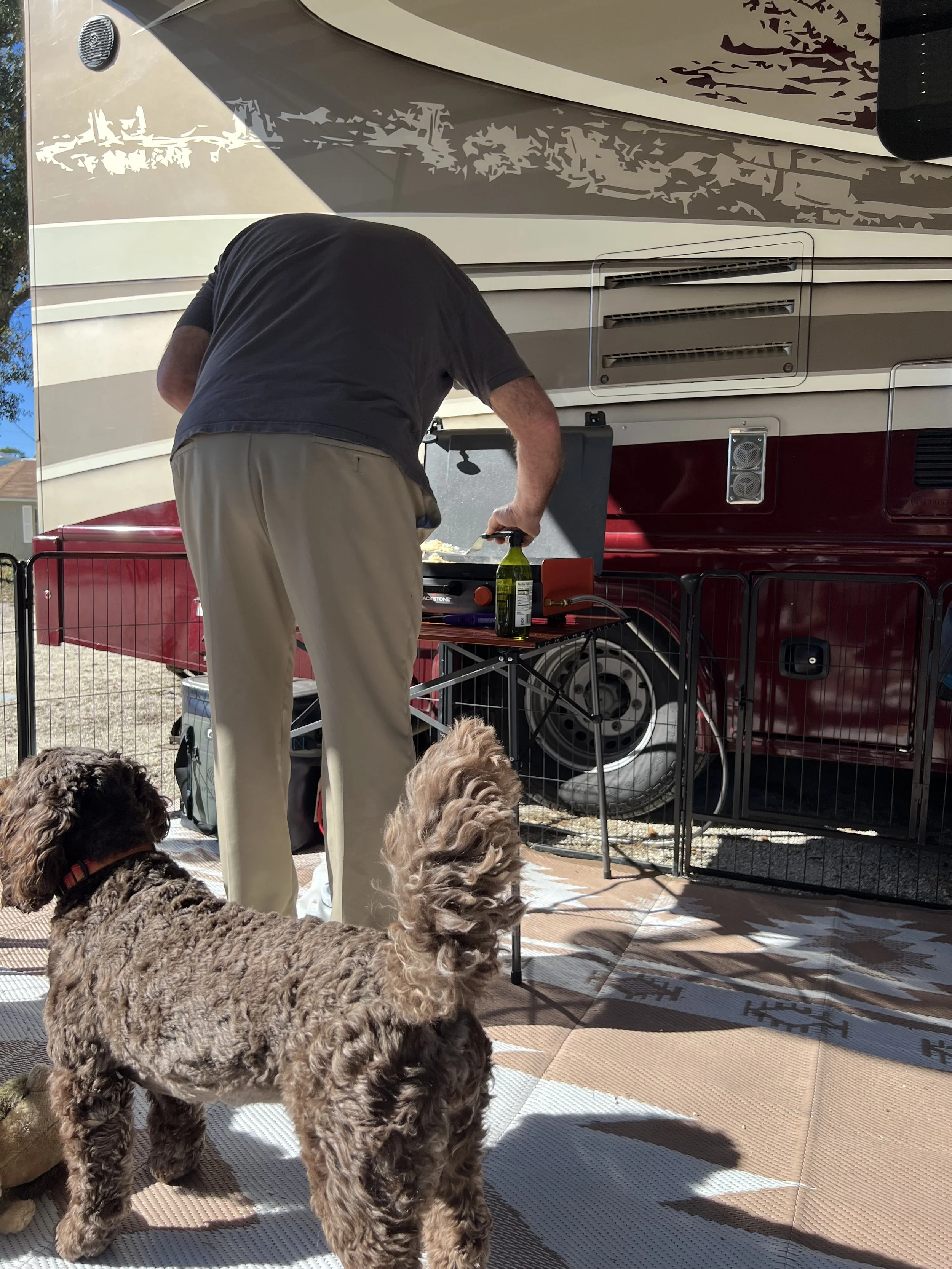
Separation Anxiety: The Hardest One
Here’s the complicated truth about separation anxiety in an RV: you can’t just leave them in the rig and go wander a park for six hours. It’s not safe temperature-wise, it’s not fair to them emotionally, and honestly, your neighbors will not thank you for the soundtrack.
So, we adjusted how we travel - and I won’t pretend that wasn’t a significant adjustment, but it was conscious and felt like the right decision for our unconventional family. We choose trips and campgrounds based on the pet-friendly factor. We use apps like “Bring Fido", “Campendium” and “Camp Spot” to search for dog friendly places to camp, hike and dine. There are lots of dog-friendly trails, restaurants and breweries (more than you’d think). We take Simon and Pru to eat with us, hike with us and for quiet strolls in the campground. They are rarely left alone, and that is our choice.
There are cameras and monitoring systems on the market for the purpose of keeping an eye on your pups in the RV while you have gone adventuring. I am sure there are some good and reliable models. Do your research. I realize not every dog wants to be so involved and respect that completely.
Medication - Because Sometimes it’s the Best Option
Sometimes, you’ve done your best and worked tirelessly with your dog and still, your dog exhibits high-anxiety behavior. Do not be ashamed - seek help. Talk to your veterinarian about calming supplements such as Zylkene or Composure Chews or medication such as Trazodone or Gabapentin. All of which can be very helpful and are said to be relatively harmless. Some of these can take a week or two to build up to be effective, so be sure to start in plenty of time before you hit the road
The Grace to Learn Together
There are those days at the campground that are just loud. There’s a thunderstorm or the generator next door kicks on at midnight and nobody sleeps well and the dogs are pacing and panting and you’re questioning every decision you’ve ever made.
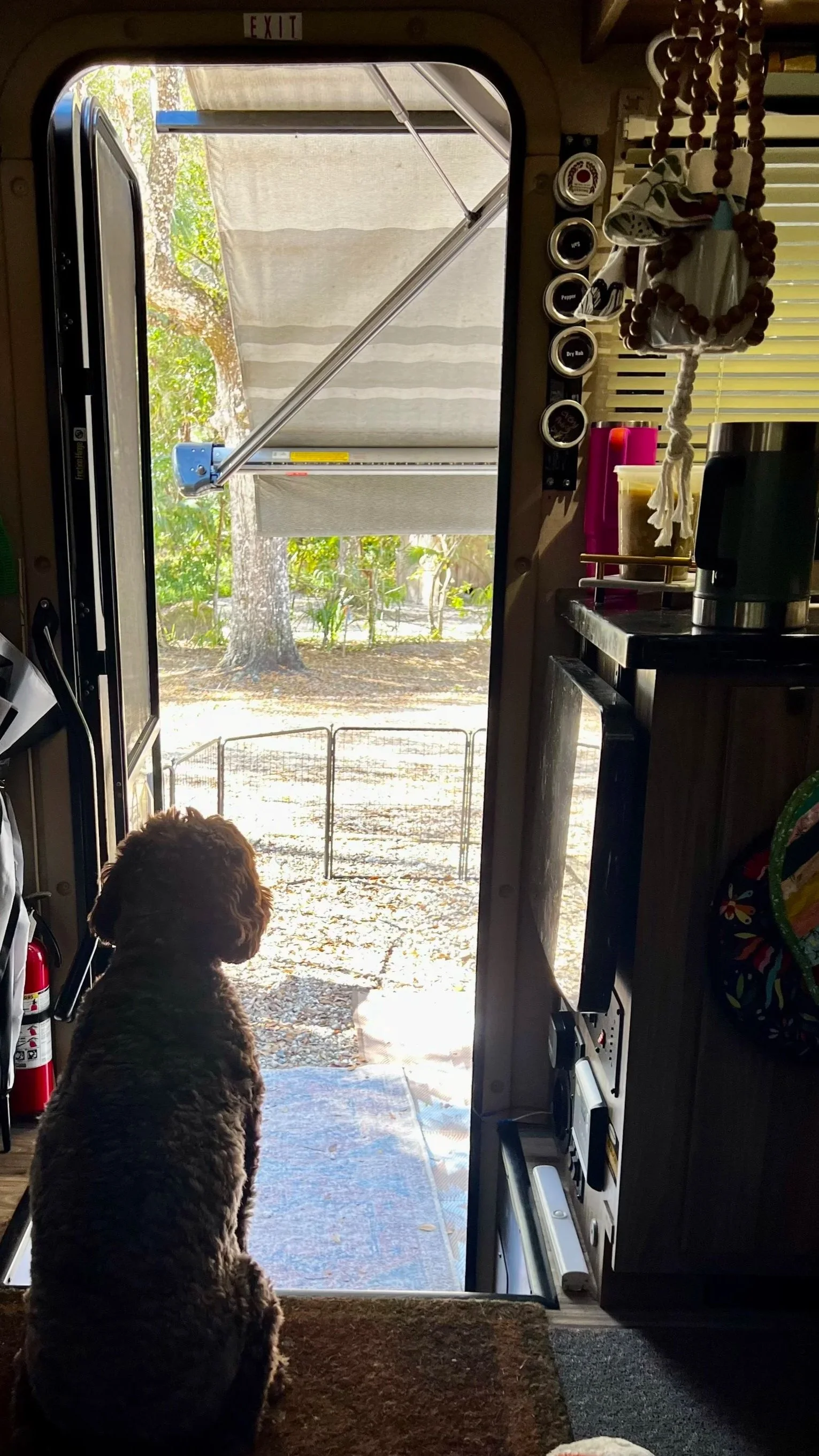
Then there’s the lovely days. Coffee brewing in the morning and you open the door. There’s mist on the lake and the dogs are sniffing around in the dewy grass with their tails going. Prudence looks up at me with a familiar tilt of her head and I think, “ Yeah, they are loving this”.
The anxiety doesn’t disappear, but it gets manageable. We all get used to the rhythms of camp life - dogs included. Travel becomes normal, and you get to watch them figure that out in real time, which is one of the better things about this life. You just have to give them - and yourself - the grace to learn it together.
